Indonesia Manufacturers Use Computer Vision to Catch Quality Drift Earlier
Factories are combining camera inspection with process data to identify subtle quality drift before defects accumulate across a production run.


SYNTHETIC EDITORIAL QA FIXTURE - not real reporting
Key takeaways
Vision systems are moving from final inspection toward earlier process checkpoints.
Factories still keep human review for borderline cases and new defect types.
The strongest programs connect image findings with machine settings and batch history.
“A camera can find the visible symptom, but operations teams still need the process context that explains why it happened.”
Inspection moves upstream
Manufacturers are placing inspection cameras at intermediate production steps instead of relying only on end-of-line checks. Earlier signals can help teams stop a process before a large batch requires rework.
Borderline cases stay human
Low-confidence detections and unfamiliar visual patterns are routed to quality engineers. Those reviews are then used to update defect libraries and thresholds rather than assuming every anomaly belongs to a known category.
Images need process context
Plants are linking visual detections with machine settings, material lots, operator shifts, and maintenance events. That context helps distinguish a random cosmetic issue from a repeatable process problem.
Learning loops improve prevention
The long-term value may come from turning inspection data into prevention. Factories that close the loop between defect evidence and process adjustment can reduce scrap without over-automating quality decisions.
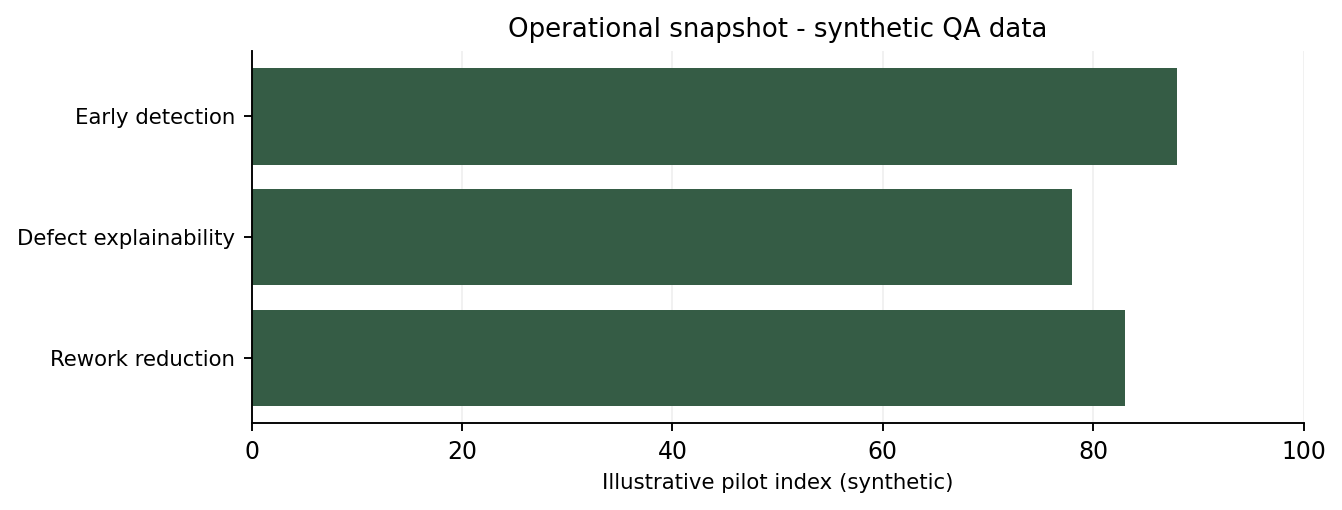
Synthetic data snapshot
| QA metric | Before / baseline | Pilot / after | Interpretation |
|---|---|---|---|
| Defects found before final QA | 42% | 71% | Earlier detection |
| False alert review | 19% | 11% | Cleaner triage |
| Rework hours per batch | 14.2 | 8.1 | Lower rework load |
QA note: All organizations, metrics, quotations, people, and scenarios in this file are synthetic and created only to test editorial import, taxonomy mapping, rich-text preservation, images, charts, tables, quote handling, and article workflow behavior.