Malaysia Telcos Apply AI to Reduce Radio Network Energy Use
Mobile operators are using traffic forecasting to adjust network capacity during low-demand periods while keeping service quality and coverage safeguards in place.


SYNTHETIC EDITORIAL QA FIXTURE - not real reporting
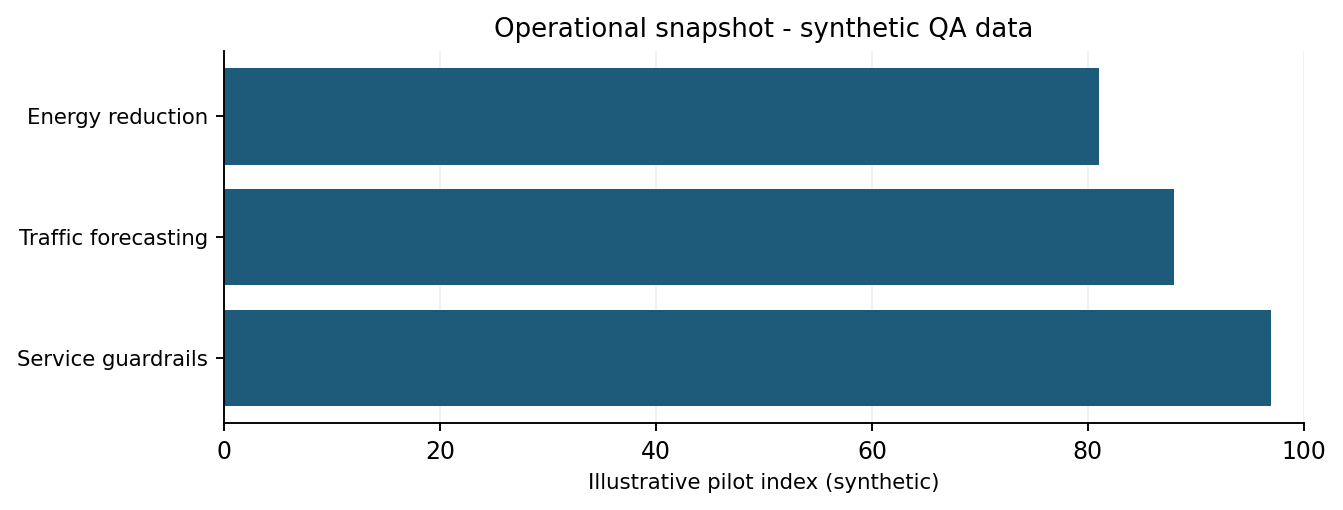
Key takeaways
Energy optimization is moving from static schedules toward traffic-aware network control.
Operators are keeping hard service thresholds that the optimization model cannot override.
The business case depends on energy savings that do not create customer-experience regressions.
“The network can sleep more intelligently, but only inside boundaries that protect coverage and service quality.”
Traffic patterns guide energy decisions
Radio access networks consume substantial power even when traffic falls. New systems forecast demand and recommend when selected capacity layers can be reduced or restored without affecting coverage targets.
Guardrails protect service levels
Operators define minimum capacity, emergency, and quality thresholds that remain outside model control. The optimization engine works within those boundaries instead of deciding service priorities on its own.
Site differences complicate automation
Urban, suburban, and rural sites behave differently, so one policy rarely fits every location. Operators are segmenting sites by traffic pattern and operational constraints before applying automated recommendations.
Savings need customer-experience validation
The strongest programs compare energy savings with dropped sessions, latency, congestion, and complaint data. Efficiency that degrades customer experience is treated as a failed optimization.
Synthetic data snapshot
| QA metric | Before / baseline | Pilot / after | Interpretation |
|---|---|---|---|
| Night-time energy index | 100 | 84 | Lower consumption |
| Capacity restoration SLA | 94% | 99% | More reliable recovery |
| Quality regression events | 6.2% | 2.1% | Fewer service issues |
QA note: All organizations, metrics, quotations, people, and scenarios in this file are synthetic and created only to test editorial import, taxonomy mapping, rich-text preservation, images, charts, tables, quote handling, and article workflow behavior.